



Technology & commissioning
How a vane air motor works – and how to commission your ARAND motor correctly.
Operating principle
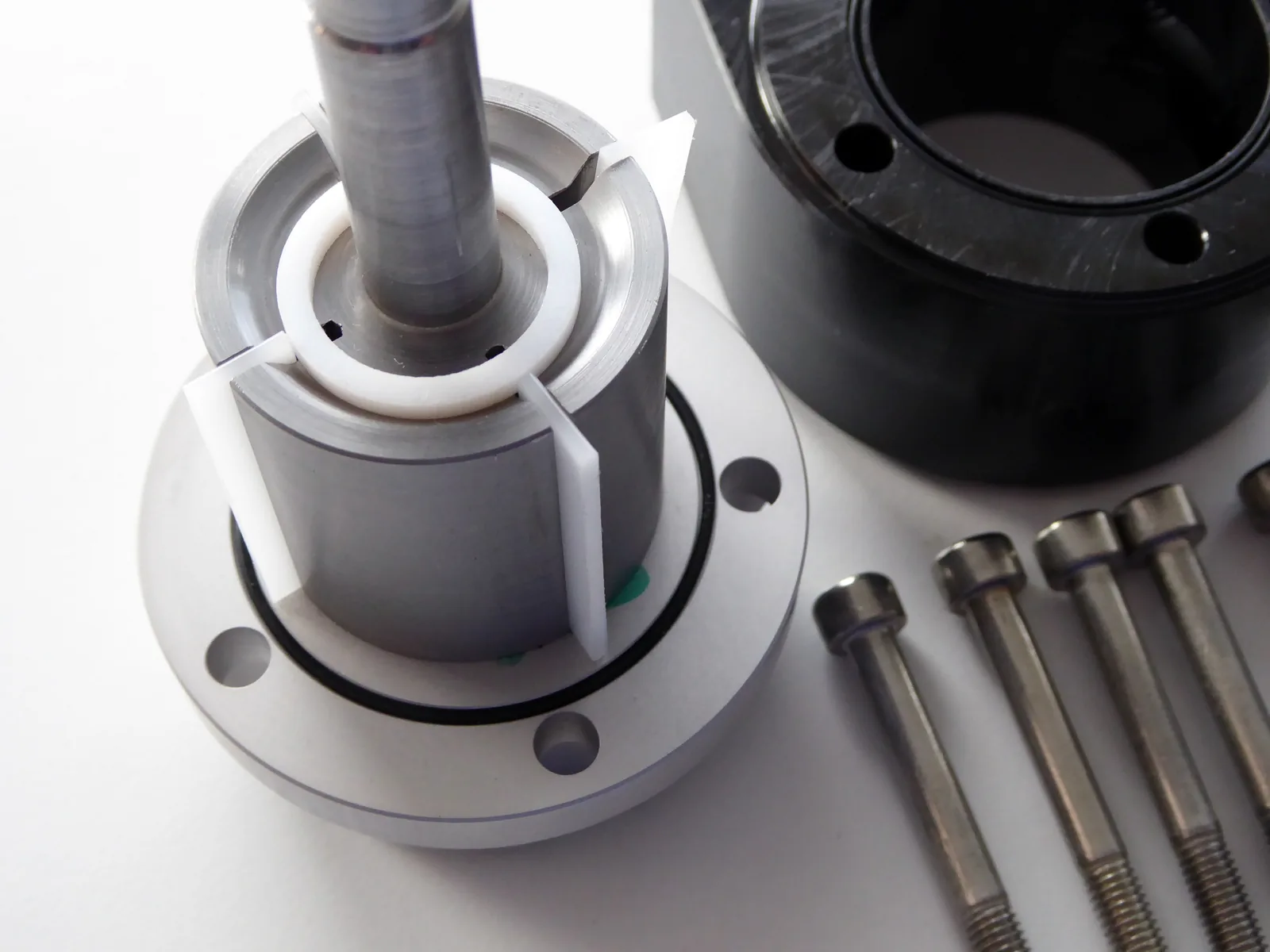
In a vane motor a rotor sits eccentrically in a cylinder. Vanes slide in slots of the rotor and rest against the cylinder wall, forming working chambers. The incoming compressed air pushes against the vanes and turns the rotor – the expanded air escapes through the silencer.
In ARAND motors vane guide rings hold the vanes against the cylinder wall even at standstill. This ensures positive starting – the motor starts reliably under load. Stalling under load is permitted; the motor cannot overheat or burn out.
- Torque adjustable via pressure, speed via air flow
- Change of rotation by switching the air connection
- Any mounting position, ambient temperature −20 °C to +60 °C
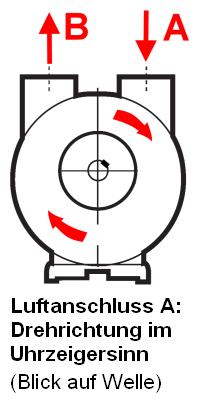
Direction of rotation
Air connection A: clockwise rotation (viewed on the shaft). Air connection B: anticlockwise. The other connection serves as exhaust.
Oil-free operation
Oil-free operation possible up to max. 2000 rpm; requires dry air filtered to 5 µ. With lubricated air the motors have a longer service life.
Commissioning
Blow out the lines
Before first commissioning or after changes to the pipework, blow out the lines before connecting the motor.
Fit an air filter
Use an air filter of at least 64 µ – for oil-free operation dry air filtered to 5 µ.
Spray in a little oil
Before connecting, spray a little oil into the air inlet so that the motor does not run dry when first started.
First run without silencer
Run the motor briefly without the silencer – otherwise oil would clog the silencer and reduce performance.
Operating notes
- Air lubrication: continuous operation 3 – 5 drops/min, short-time operation 9 – 12 drops/min
- Observe permissible speeds, bearing loads and system pressures
- Radial load at centre of shaft 150 N, no axial load on the shaft permitted
- No axial impacts on the shaft – especially when mounting gearboxes
- For geared motors observe the permissible output torque of the gearbox
Your drive – our air motor
Tell us the required power, speed, torque and operating environment – we will recommend the right ARKD motor or geared motor, also as a special version.
Send an enquiry